Dive Shop Operations Course – Khao Lak, Thailand
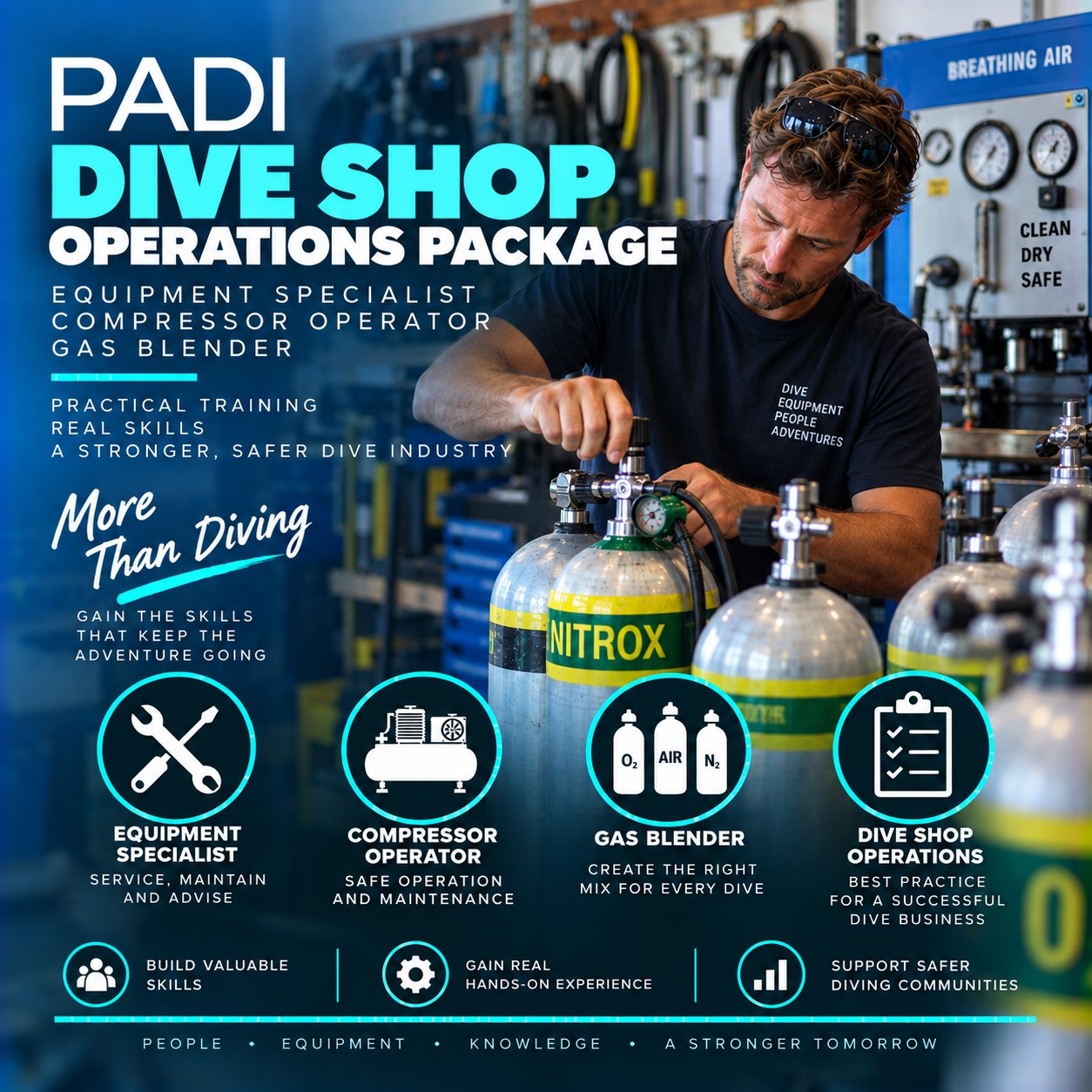
Practical Skills for Working in a Dive Centre
Being a good dive professional involves more than guiding dives and teaching courses. Dive centres also need staff who understand the equipment, gas filling systems and day-to-day technical operations that keep a busy dive shop running.
Our Dive Shop Operations Course is designed to give divers and dive professionals practical experience in some of the important behind-the-scenes skills used in a working dive centre.
The program combines two recognised PADI courses with additional practical training in compressor operation and basic maintenance:
- PADI Tec Gas Blender
- PADI Equipment Specialist
- Compressor Operation
- Basic Compressor Care and Maintenance
- Practical dive centre equipment and filling procedures
It is particularly useful for Divemasters, instructors and divers planning to work in the dive industry, although you don't need to be a dive professional to benefit from the course.
PADI Tec Gas Blender
Gas blending is an important skill in dive centres offering enriched air nitrox or technical diving.
The PADI Tec Gas Blender course introduces the principles, procedures and safety considerations involved in producing breathing gases for scuba diving.
Training includes subjects such as:
- Oxygen safety
- Gas analysis
- Cylinder preparation and handling
- Enriched air nitrox blending
- Gas blending calculations
- Filling procedures
- Gas labelling and record keeping
- Understanding blending equipment and systems
Depending on the equipment and gases available during your training, the course can also introduce the principles involved in blending helium-based gases.
PADI describes gas blending as a key role within busy PADI Dive Centers and Resorts, particularly as demand for enriched air and technical diving continues to grow.
Official PADI information:
PADI Tec Gas Blender
Gas blending is particularly relevant if you are interested in technical diving. You can explore our complete technical diving pathway here:
Professional Diver Training:
Technical Diver Training – Tec 40 to Trimix
You may also be interested in:
PADI Equipment Specialist
Dive professionals work with scuba equipment every day. Understanding how that equipment functions makes it easier to identify problems, look after rental equipment and deal with the minor equipment issues that inevitably occur around a busy dive centre.
The PADI Equipment Specialist course develops your understanding of scuba equipment and introduces practical equipment care and basic repairs.
Topics can include:
- How common scuba equipment works
- Equipment inspection
- Routine care and preventative maintenance
- Correct cleaning and storage
- Identifying common equipment problems
- Basic repairs and adjustments
- O-rings, hoses, straps and other common replacement items
- Building an effective save-a-dive kit
The course is not intended to turn you into a manufacturer-authorised regulator technician. Instead, it gives you a much better practical understanding of the equipment you use and work with every day.
Official PADI information:
PADI Equipment Specialist
Compressor Operation
The compressor is at the heart of most dive centre operations.
As part of the Dive Shop Operations Course, we provide practical instruction in the safe operation of a scuba compressor and filling station.
Depending on the compressor and filling system used during your training, subjects may include:
- Compressor components and operation
- Pre-start checks
- Safe compressor start-up and shutdown
- Cylinder inspection before filling
- Safe cylinder filling procedures
- Monitoring pressure and temperature
- Condensate draining
- Filter systems
- Compressor logs
- Basic troubleshooting
- Recognising when professional servicing is required
- Routine operator maintenance
This section is practical operational training rather than a PADI certification and is designed to help you become familiar and confident with the equipment commonly encountered in dive centres.
Basic Compressor Maintenance
A compressor is a major piece of life-support equipment, so knowing the difference between routine operator maintenance and work that requires a qualified technician is important.
We will look at routine maintenance tasks and how to recognise potential problems before they become serious.
The exact content will depend on the compressor available for training, but the emphasis throughout is on safe operation, preventative maintenance and understanding the limits of what an operator should attempt themselves.
Who Is This Course For?
The Dive Shop Operations Course is particularly useful for:
- PADI Divemasters
- New PADI Instructors
- IDC candidates
- Divers looking for their first job in the diving industry
- Technical divers
- Dive centre staff
- Divers interested in understanding more about the equipment and infrastructure behind their diving
If your goal is to work professionally in diving, this course is an excellent addition to your instructor or Divemaster training.
Already considering becoming an instructor?
Explore our PADI Instructor Development Courses
Or see our broader:
For instructors looking to develop a wider range of useful teaching qualifications, you can also explore:
More Than Just Diving Skills
A newly qualified Divemaster or Instructor may know how to supervise divers or teach courses, but employers also value people who can contribute to the everyday operation of their dive centre.
Understanding equipment, compressors and breathing gases can make you a much more versatile member of a dive team.
Our Dive Shop Operations Course is designed to help bridge that gap between being qualified as a dive professional and understanding how a real dive operation works.
Dive Shop Operations Training in Khao Lak
Training is conducted in Khao Lak, Thailand, with Professional Diver Training and access to working dive-centre equipment and facilities.
The aim is simple: give you useful, practical skills that you can take with you into your next dive-industry job.
Interested in Dive Shop Operations training?
Contact Professional Diver Training to discuss course dates, prerequisites and combining the course with your Divemaster, IDC, Specialty Instructor or technical diving training.